When the Founder Is Still the Growth Engine
In many founder-led companies, the founder is the growth engine. Their judgment, relationships, energy, and urgency created the revenue the business has today. The constraint appears when growth still depends on that one person: every important deal, decision, campaign, and escalation routes through the founder, and the business cannot grow faster than their calendar.
How founder dependency shows up
- growth slows when the founder's attention shifts
- the team executes tasks but does not own outcomes
- agencies and vendors are managed by instinct rather than accountability
- reporting exists, but decisions still rely on the founder's feel for the business
- hiring happens, but delegation does not
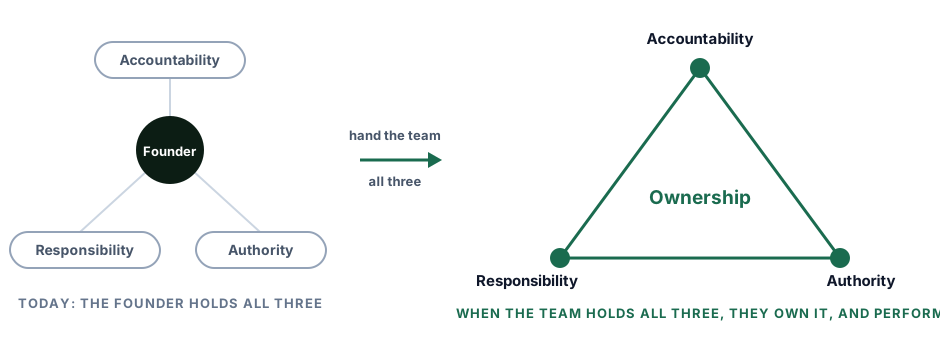
These are symptoms. The underlying constraint is usually a missing layer of commercial systems and senior judgment between the founder and the day-to-day work. The framework behind the diagram below is explained in the iron triangle of getting things done.
What the work looks like
The engagement starts with a diagnostic view of where growth is breaking down and what depends on the founder personally. From there, the work builds the layer the business is missing: clear priorities, accountable vendors and teams, reporting leadership can trust, and an operating cadence that keeps growth moving without requiring the founder in every decision.
The goal is not to remove the founder from growth. It is to make the founder's judgment scalable, so the business grows on systems rather than adrenaline.
Frequently asked questions
Does this replace hiring a marketing leader?
Sometimes it precedes one. A fractional engagement can build the systems and clarity a future full-time leader will need, and can define what that role should actually be before the company commits to a hire.
How involved does the founder stay?
Closely involved at the decision level, far less involved at the task level. The point is to protect the founder's time for the decisions only they can make.
How long does it take to reduce founder dependency?
It depends on how concentrated the dependency is, but the structure usually changes before the habits do. Clear owners, an operating cadence, and reporting leadership can trust are typically visible within the first quarter. The founder trusting the system enough to let it run takes longer, and that is normal.
How does the iron triangle of getting things done apply to founder-led companies?
The iron triangle is the delegation framework behind this work: a team member performs at their best when they hold all three of accountability, responsibility, and authority for an outcome. Founder dependency is usually the founder holding all three.
What are the signs a business is too dependent on the founder?
Growth decisions wait for the founder's calendar, vendors and team members escalate everything upward, no one else can explain what marketing is returning, and revenue dips whenever the founder's attention moves elsewhere. Each is a sign the business runs on one person's judgment instead of a system that carries it.