When the Product Works and Go-to-Market Doesn't
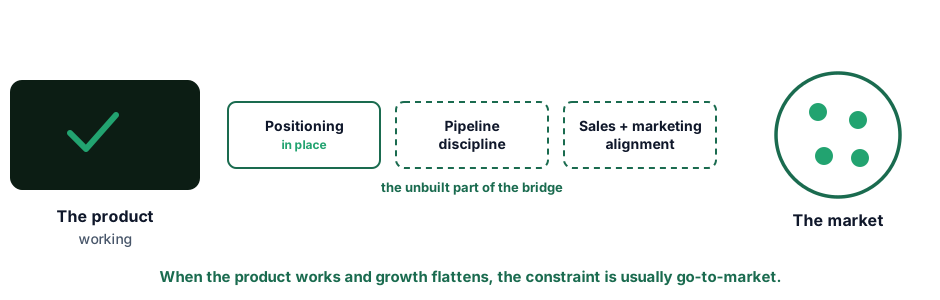
The product is solid. Customers who find it tend to stay. The constraint isn't the offer, it's everything between the offer and a signed account: positioning, the commercial systems tying sales and marketing together, or a go-to-market motion that hasn't kept pace with the product.
For B2B and SaaS companies, the growth constraint is usually structural rather than tactical: no single commercial system connecting demand, sales, and customer success, or a go-to-market plan built for an earlier stage of the product. The product performing well often masks a go-to-market gap until growth flattens.
What this usually looks like
Pipeline exists, but conversion from opportunity to closed revenue is inconsistent and hard to explain. Marketing and sales run on separate definitions of a qualified lead. Expansion revenue sitting in the existing customer base isn't being pursued with any real system behind it.
Where it tends to break
For B2B and SaaS companies, the constraint is usually structural rather than tactical: no single commercial system connecting demand, sales, and customer success, or a go-to-market plan built for an earlier stage of the product that hasn't been rebuilt for the current one. This is a variant of the same connective-tissue problem growth-stage companies face, applied to a subscription or platform commercial model specifically.
How we help
Growth Advisory provides senior judgment on go-to-market priorities and commercial system design. A Fractional CMO takes direct ownership of the function where the gap is leadership, not just direction.
Frequently asked questions
Is this different from the Growth-Stage segment?
Related, but specific to subscription and platform commercial models: the constraint here is usually the system connecting demand generation, sales, and customer success around a recurring-revenue motion, not general scale.
Do you work inside a product-led growth model?
The engagement is about the commercial system around the product, positioning, sales motion, expansion revenue, not product development itself.
Do you need experience in our specific vertical?
The method does not depend on the vertical. The diagnostic approach is the same in any market: learn how the business makes money, find where the commercial system is breaking, and direct resources against the constraint. Domain specifics are learned in the first phase of every engagement.
How does this work alongside a VP of Sales or CRO?
As a complement, not a rival. Sales leadership owns the sales motion; this work connects demand, sales, and customer success into one commercial system and gives leadership an independent read on where that system is breaking down.
Why is our customer acquisition cost rising?
Rising CAC is usually a system signal, not just a channel signal: audiences saturate, competitors bid up the same demand, and conversion or retention leaks force the company to buy more traffic to hit the same number. Before spending more, the higher-leverage question is whether positioning, conversion, and expansion revenue are pulling their weight.