When the Leads Aren't the Problem, the Follow-Up Is
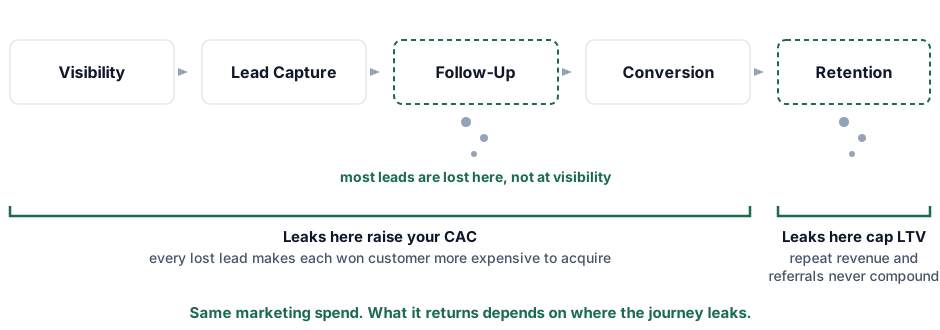
In a service business, growth lives or dies in the revenue journey. Visibility brings the inquiry, follow-up speed wins or loses it, conversion turns it into revenue, and customer experience determines whether it comes back and refers. A weakness at any one point quietly taxes every dollar of marketing spend upstream of it.
Where service businesses usually leak revenue
- inquiries arrive, but follow-up is slow or inconsistent
- marketing spend rises while close rates stay flat
- reviews and referrals underperform the quality of the actual work
- repeat and retention revenue is smaller than it should be
- vendors report activity without connecting it to booked revenue
Most service businesses do not need more leads first. They need to stop leaking the demand they already generate, then scale what works. The revenue journey in a service business is a connected system. Improving visibility without fixing follow-up creates waste. Improving follow-up without improving conversion moves the bottleneck rather than solving it. The work starts by finding the constraint that is most limiting revenue today, then addressing it in the right order.
What the work looks like
The engagement maps the full revenue journey: visibility, lead capture, follow-up, conversion, customer experience, retention, and referrals. It identifies where revenue is leaking, what constraint is causing it, and in what order to fix it. Then it directs the work: vendor accountability, follow-up systems, conversion improvements, reporting leadership can act on, and a cadence that keeps it improving.
In practice, that may mean tightening the time between an inquiry and a response, clarifying which channels are actually producing booked revenue versus activity, improving the connection between customer experience and referrals, or restructuring reporting so that leadership sees what matters rather than what is easiest to measure.
The work is not channel-specific. It addresses the growth system as a whole: where demand comes from, how it converts, what happens after the first transaction, and whether the business is building durable revenue or replacing lost customers with new ones. Vendors and agencies are evaluated against business outcomes rather than activity metrics, and reporting is restructured so leadership can see what is actually affecting performance.
How to choose the right engagement
Service businesses typically work with State of Mind Strategies through one of two engagement types, depending on the constraint.
Growth Advisory fits when leadership has the team and vendors to execute but needs sharper priorities, stronger accountability, and a clearer view of where the revenue journey is breaking down. The advisory relationship provides ongoing senior guidance, focused decision support, and a cadence for reviewing what is working and what should change.
Fractional CMO support fits when the marketing and growth function needs senior leadership, not just advice. The fractional CMO sets strategy, directs teams and vendors, manages budget discipline, installs reporting, and owns accountability for commercial outcomes. Many service businesses find that agencies and internal staff are working hard but lack senior direction connecting their activity to revenue. The role makes marketing, sales, customer data, technology, and vendor execution work together as a commercial system rather than operating as disconnected efforts.
Not sure which model applies? The simplest test: if the advice is right, who will execute it? If the team can execute with clearer direction, start with Growth Advisory. If no one is truly leading the function, consider Fractional CMO support.
Frequently asked questions
Is this a marketing agency engagement?
No. State of Mind Strategies does not sell channels or execution services. The work is diagnostic and leadership: finding the constraint, setting priorities, and directing whoever executes, including existing vendors.
Does company size matter?
The fit test is not size. It is whether there is enough revenue, complexity, ambition, or value at stake for focused growth work to matter.
Do we need to replace our current agencies or vendors?
Usually not. Many service businesses keep their existing agencies but improve performance by adding senior leadership, clearer priorities, better metrics, and stronger accountability. If a vendor is not producing return, that should become clear during the diagnostic.
What type of engagement is best for a service business?
It depends on the constraint. If the team can execute once priorities are clear, Growth Advisory may be the right fit. If the marketing and growth function lacks senior leadership, a Fractional CMO engagement is usually more appropriate. A discovery call helps clarify which model matches the situation.
How does this differ from hiring a marketing consultant?
Consulting often delivers recommendations. This work provides ongoing leadership, accountability, and a cadence that keeps the revenue journey improving over time. The goal is not a report. It is clarity, direction, and measurable progress.
Why is our referral pipeline slowing?
Referrals usually slow for structural reasons, not reputational ones: the customer experience that generated them has drifted, no one is systematically asking for or rewarding them, and the business has grown past the network that fed it. A slowing referral pipeline is often the first sign a service business needs deliberate demand generation, not a symptom to wait out.
Go deeper: Growth Consulting for Service Businesses covers the referral ceiling, where service revenue journeys leak, and what to fix before buying leads.