You Have the Team and the Budget. You're Missing the Person Connecting Them to Revenue.
Growth-stage companies rarely lack resources. They have teams, agencies, tools, dashboards, and budgets. What breaks at this stage is coordination: marketing, sales, product, and operations each optimize their own lane while the constraint that actually limits growth sits between them.
What breaking down looks like at this stage
- more spending and larger teams, but flat or slowing growth
- functions that each look fine in their own reporting
- technology purchased for leverage that added complexity instead
- priorities that shift faster than execution can follow
- leadership debates about symptoms while the constraint goes unnamed
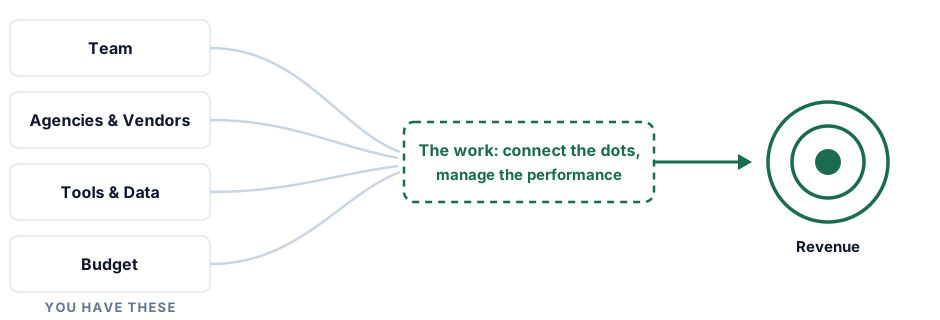
What the work looks like
The engagement brings a single commercial view across functions: where in the growth system performance is breaking down, and which underlying constraint is causing it. From there, the work sets priorities, aligns budgets and vendors against them, builds reporting that supports decisions rather than defends departments, and installs an operating cadence that holds.
For companies that need ongoing senior leadership of the function, this often takes the form of a fractional CMO engagement. For companies with capable teams that need direction and accountability, growth advisory is usually the better fit.
Frequently asked questions
How is this different from hiring consultants for each function?
Function-level consultants improve their function. This work sits above the functions, at the level where growth actually breaks: the connections between marketing, sales, data, technology, and execution.
What does leadership get out of it?
A clear answer to the question that should guide every growth decision: where is your next dollar or minute best spent.
Do you replace our existing team or leaders?
No. The work sits above the functions, not instead of them. Existing leaders usually get clearer priorities, cleaner reporting, and better coordination, which tends to make good people more effective rather than redundant.
How do you work with our existing agencies and vendors?
They stay, if they perform. Vendors are brought into the operating cadence, evaluated against business outcomes rather than activity, and given clear direction to perform against. Most improve under that structure; the ones that do not make the decision easy.
What growth problems appear after $5M in revenue?
The problems change shape: the founder's instincts stop scaling, the first marketing hires need direction no one has time to give, spend grows faster than the ability to measure it, and functions that once coordinated informally start dropping handoffs. What got the company to $5M is usually what limits it afterward, which is why the fix is structural rather than tactical.