The Commercial Growth Model
The Commercial Growth Model is the operating approach State of Mind Strategies uses to evaluate how a company grows, where performance is breaking down, why it may be happening, and where resources should be focused first.
It is not software, a checklist, or a fixed deliverable. It is a disciplined way to separate symptoms from constraints and identify where your next dollar or minute is best spent.
"Every day a systemic constraint goes unresolved, the business pays three times: in money spent on symptoms, in time the team cannot get back, and in the growth that went to someone else."
Zachary Leifer
Two questions, not one
Most companies ask where the problem is. Fewer ask why it is happening.
That distinction changes the work. Slow follow-up may be a process issue, a CRM visibility issue, an ownership issue, a staffing issue, or a management cadence issue. Each requires a different fix.
The Commercial Growth Model separates those questions:
- Where in the growth system is performance breaking down?
- What underlying constraint is causing the breakdown?
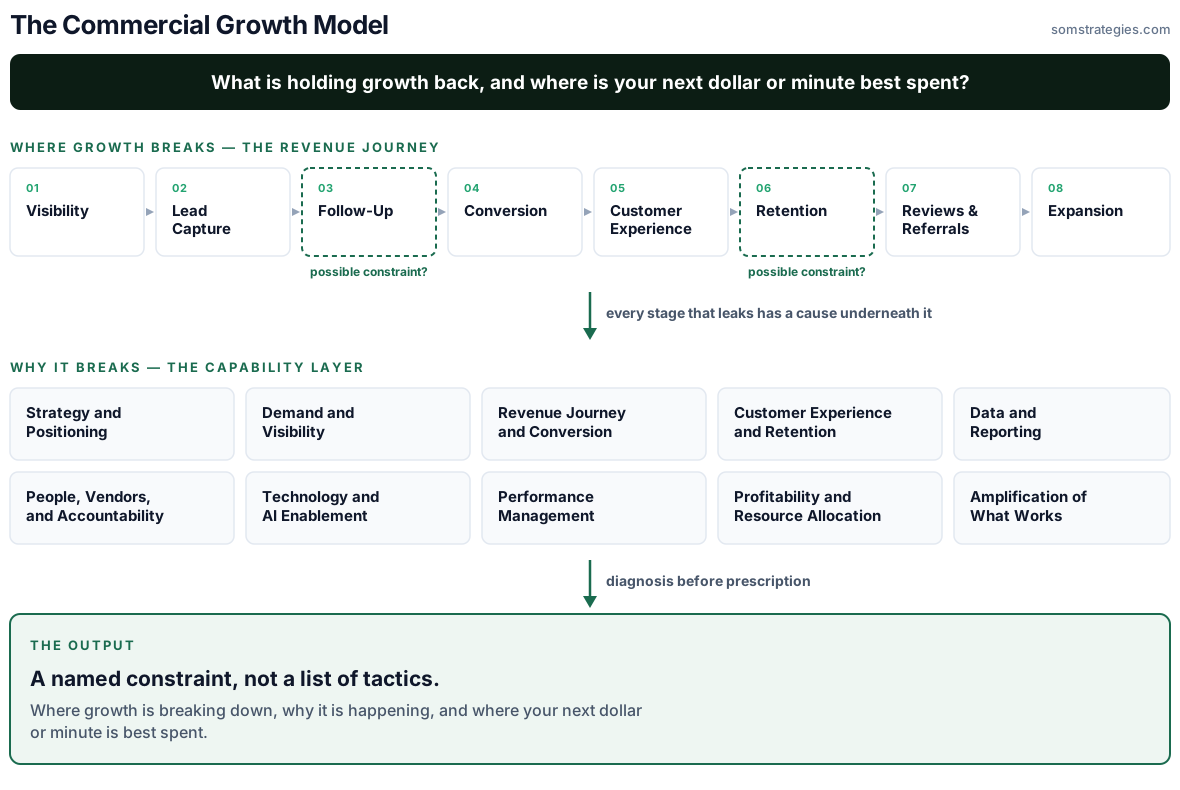
Where growth can break
The model evaluates ten growth areas.
Strategy and positioning
Who the company serves, what it sells, why it wins, and where growth should come from.
Demand and visibility
Search visibility, referrals, paid and organic demand, partnerships, reputation, and AI/search discoverability.
Revenue journey and conversion
How prospects become leads, opportunities, customers, repeat buyers, advocates, and referral sources.
Customer experience and retention
How the company delivers value, creates satisfaction, earns repeat business, and reduces avoidable churn.
Data and reporting
Whether leadership can see what is working, what is leaking, and where decisions should be made.
People, vendors, and accountability
Whether teams, agencies, partners, and internal owners are clear on responsibilities and measured against meaningful outcomes.
Technology and AI enablement
Whether CRM, marketing tools, analytics, automation, AI, reporting, and workflow systems support growth or create complexity.
Performance management and optimization
The KPIs, dashboards, meetings, testing rhythm, and decision cadence that turn information into action.
Profitability and resource allocation
Whether time, capital, people, and execution capacity are focused on the opportunities most likely to create return.
Amplification of what works
Whether proven channels, messages, partnerships, processes, and customer segments are being scaled effectively.
Why growth breaks
Underneath those growth areas, the constraint usually falls into one or more categories:
This is why two companies can show the same symptom and need different fixes.
The revenue journey
The model also evaluates the revenue journey:
Visibility → Lead Capture → Follow-Up → Conversion → Customer Experience → Retention → Reviews and Referrals → Expansion
A business may have a visible issue at one stage and an underlying constraint elsewhere. For example, weak conversion may be caused by unclear positioning, slow response, poor handoff, missing proof, pricing friction, or reporting that hides the problem until it is too late.
What comes out of the model
The goal is a practical answer leadership can use:
- where growth is breaking down
- why it may be breaking down
- what fixing it may be worth
- which actions should come first
- what should be measured next
The output should not be a long report that sits unused. It should inform decisions about budget, people, vendors, technology, operating cadence, and execution.
How the model connects to the Growth Scorecard
The Growth Scorecard is the first, lightweight version of this thinking. It helps identify where the revenue journey may be leaking and which capability areas may be contributing to the issue.
The full model, applied to real business data and context, is deeper diagnostic and advisory work.
Frequently asked questions
What is the Commercial Growth Model?
The Commercial Growth Model is the operating framework State of Mind Strategies uses to diagnose growth. It maps where performance is breaking down across an eight-stage revenue journey, examines the capability layer underneath to understand why, and produces a named constraint and a clear answer to where the next dollar or minute is best spent.
How is the Commercial Growth Model different from a marketing audit?
A marketing audit inspects the marketing function. The Commercial Growth Model inspects the whole commercial system: demand, conversion, follow-up, retention, reporting, team, vendors, and technology. The distinction matters because the constraint limiting growth often sits outside marketing, and an audit scoped to marketing cannot find it.
What does the Commercial Growth Model examine?
Two layers. The revenue journey shows where growth breaks: visibility, lead capture, follow-up, conversion, customer experience, retention, referrals, and reputation. The capability layer shows why: strategy, positioning, reporting, team structure, vendor accountability, technology, and resource allocation.